Championing the Thoroughbred at a Grassroots Level
The morning sun cuts through the crisp winter chill at the Bathurst Pony Club grounds, lighting up the frost-covered oval. The air is filled with clinking stirrups, parents chatting as they unload gear, and the occasional whinny. It is a classic regional New South Wales Pony Club morning.
While the Pony Club movement reached a major milestone when the first Australian club opened in Ingleburn in 1939, and the state association was formally established in 1946, Pony Club has spent the last eighty years serving as the foundation of early learning in the equestrian world. It provides young riders with a structured, safe environment to master everything from basic horsemanship to elite-level disciplines. More than just a stepping stone for young riders, the pony club’s educational framework fosters the technical horse handling abilities and deep understanding of equine care that prepare passionate equestrians for a smooth transition into roles across the thoroughbred industry. Today, Pony Club NSW stands as the largest and most active member state in the country, boasting a massive footprint of over 220 local clubs and upwards of 7,000 active members.
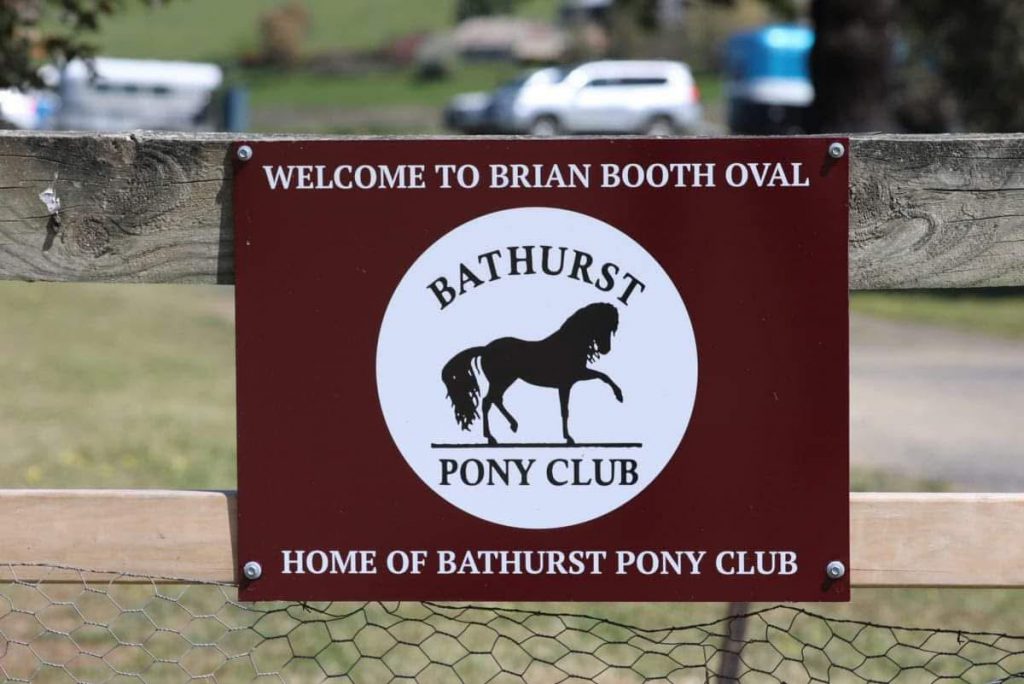
At the historic Brian Booth Recreation Ground, the Bathurst Pony Club perfectly encapsulates this sprawling grassroots network. The club has documented historical references dating back to at least 1893, reflecting a proud and enduring connection with the Bathurst region and its equestrian community. For generations, the club has supported regional riders, families and volunteers through encouraging participation, horsemanship, community spirit, and personal development. This welcoming local hub serves as the ideal backdrop for Team Thoroughbred NSW to see firsthand how former racehorses are thriving in a community setting and reshaping what life after racing truly looks like.
The President’s Perspective: Matching the Foundation
Welcoming Team Thoroughbred NSW to the Bathurst grounds is Bathurst Pony Club President, Emily Cotterall, a lifelong advocate for retired racehorses whose connection to the breed is deeply woven into her family history.
“My grandfather left a lasting legacy breeding racehorses, and my uncles have a long history of retraining them for eventing once their track days finished,” Emily shares. “Growing up with them, and through my own experience over the years, I’ve seen firsthand that their trainability and kindness are intrinsic traits passed down through generations.”
From an administrative and safety standpoint, Emily is quick to challenge the common “too hot” stereotype. Instead, she highlights the Thoroughbred as the ultimate all-rounder. On a typical rally day, a single horse must switch effortlessly from precision flatwork and dressage to high-energy sporting, showjumping, and troop drill—a demanding environment where the breed truly shines.
Finding the right partner simply means understanding the nuances of the breed.
“Thoroughbreds come in all shapes, sizes, and temperaments, which is why researching their pedigree and track history is essential. Sprint horses and long-distance horses are bred for entirely different purposes,” Emily explains. “A horse with plenty of engine is a fantastic asset for jumping or eventing. Conversely, if you want a calm, steady mount for a rider navigating the Pony Club grades or as a Show Horse prospect, you should target a quieter, more relaxed thoroughbred type.” For families, a major bonus of the breed is their early track education. Long before stepping onto a Pony Club ground, most retired racehorses understand the basics—they float well, tie up patiently and stand quietly for the farrier.
Even so, Emily balances her enthusiasm with a realistic, safety-first message for parents. Retired racehorses require a knowledgeable foundation and are best suited to capable amateur riders and onwards—those who possess the confidence, regular coaching, and resources to guide them correctly. “Pony Club is an incredible environment for learning, but safety and correct matching must come first,” Emily stresses. Bathurst Pony Club encourages members to utilise their network of club instructors and regional coaches to ensure the partnership is safely supported from day one. With the right guidance and a solid foundation, Thoroughbreds make exceptionally loyal, versatile, and competitive partners that regional families shouldn’t overlook.
Partners in the Ring: Hayley & Bravissimo
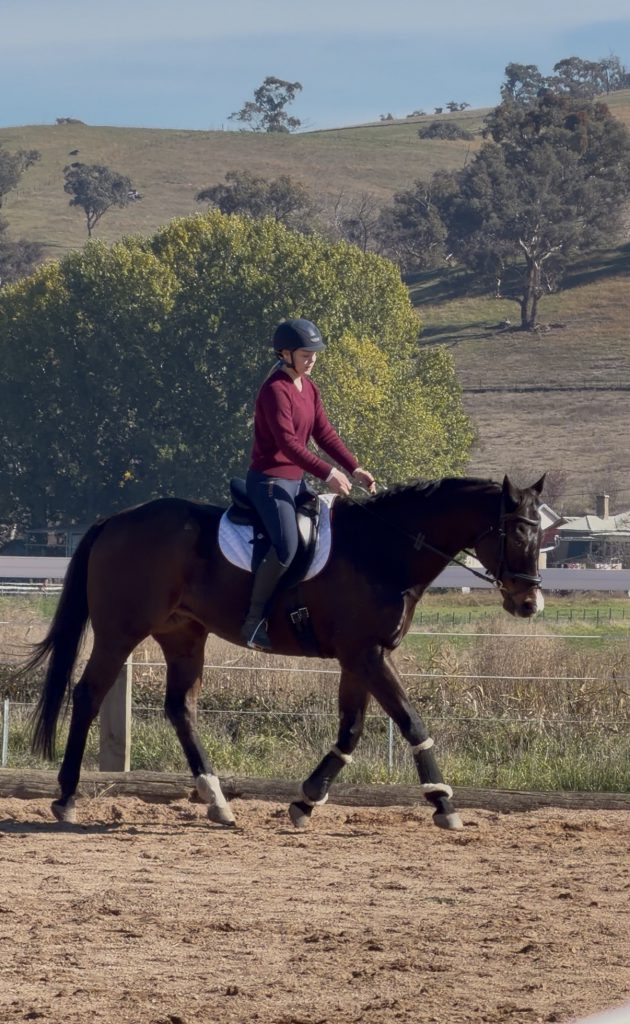
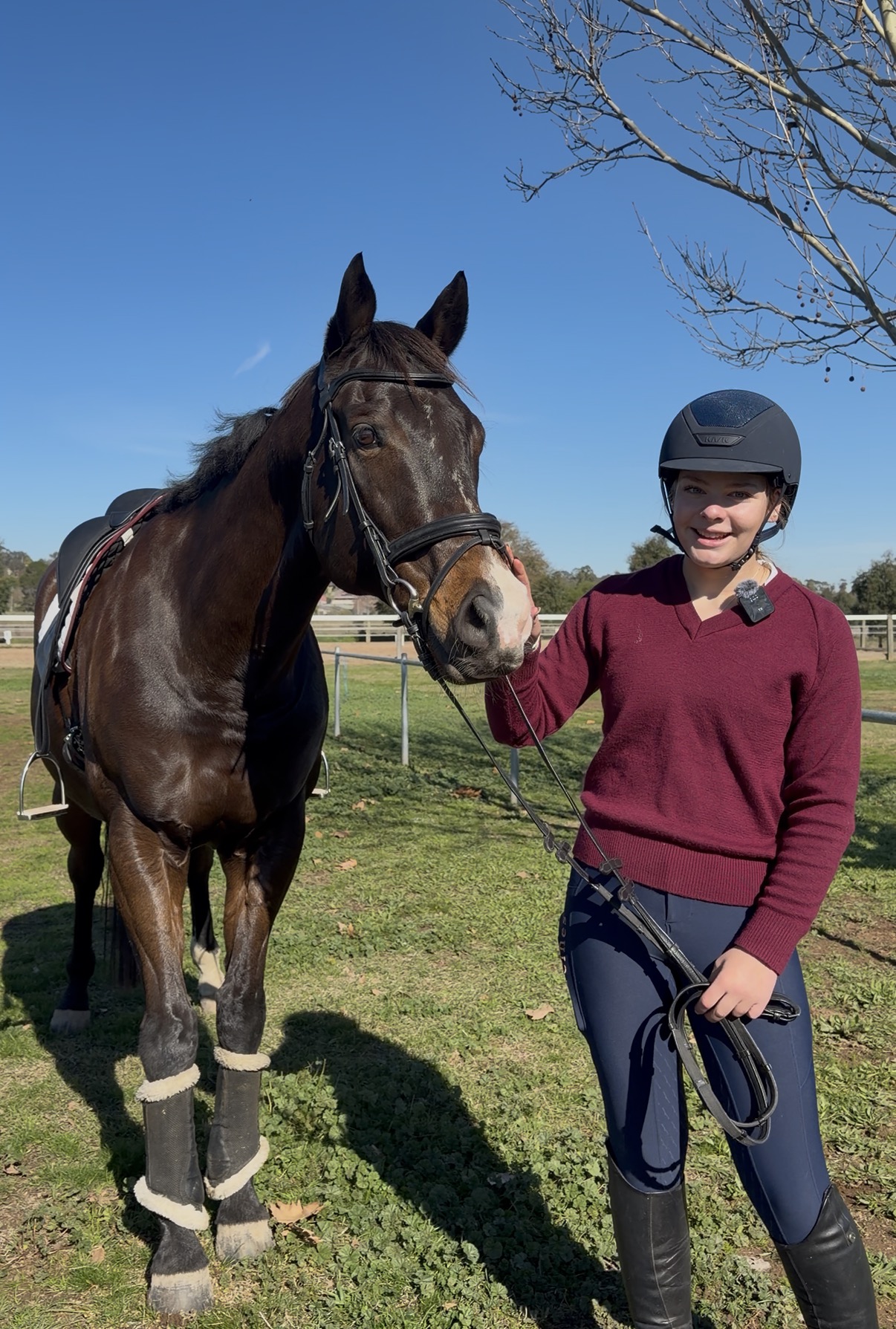
Look no further than the main arena to see the perfect example of proper matching in motion. Out at the Brian Booth Recreation Ground, teenage rider Hayley is paving the way with her friendly retired racehorse, Bravissimo—affectionately known as Bradley! This absolute gentleman is showing local riders exactly what a retired racehorse can achieve in a grassroots community setting.
Standing completely calm at the float, Bradley exudes a relaxed presence, with soft eyes and ears forward that instantly challenge the typical ex-racehorse stereotype. A glance at his shoulder reveals his prominent Thoroughbred brand, a quiet nod to his past life. Now a seasoned 12-year-old, the gelding by Congrats (USA) out of Siren enjoyed a substantial career on the track with 37 starts, securing 3 wins and 13 placings. He began his racing career in the city under the care of legendary trainer Les Bridge, racing across premier Sydney tracks like Randwick and Rosehill, before moving to country trainer, Cheryl Crockett, in Mudgee. By the time he retired with an impressive $149,070 in career earnings, he had built a foundation of experience that today simply adds to his character as he thrives as the ultimate Pony Club mount.
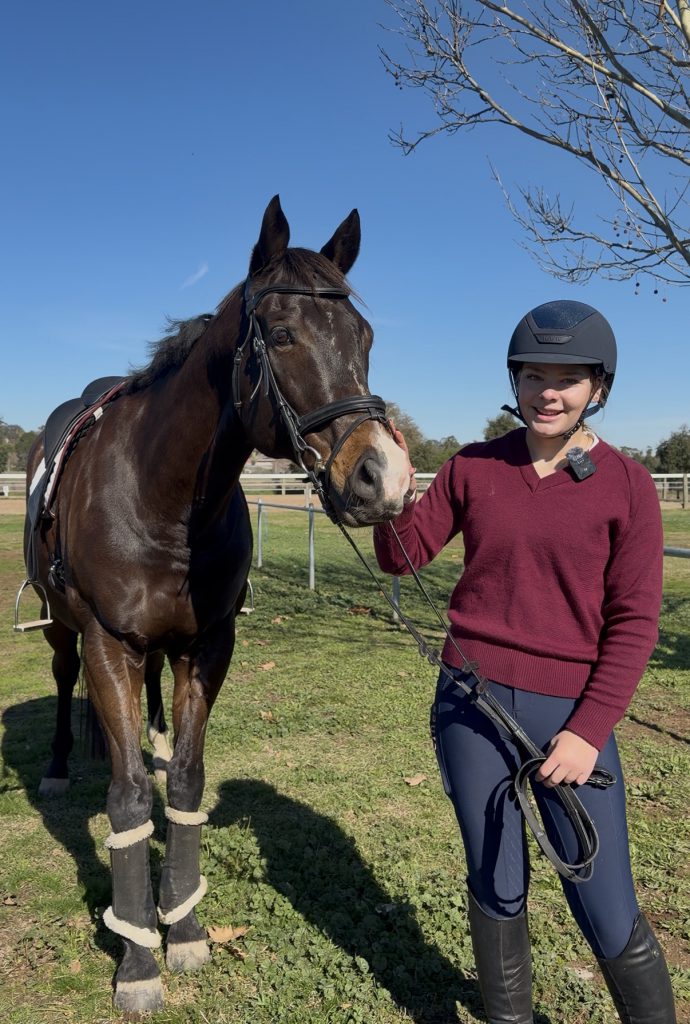
Showing independence well beyond her years, Hayley unloads Bradley from the horse float, grooms him, and tacks him up entirely by herself right, with her mum supervising nearby. All the while, Bradley happily munches on his breakfast, completely unfazed by the busy preparations of the morning rally day around him.
Hayley and Bradley truly do it all. On any given rally day, you can watch them smoothly changing gears in a dressage test, quietly navigating sporting poles, having a laugh around a showjumping course, and even trying their hand at horseback archery! The weekend also brought new learning opportunities, with Bathurst Pony Club hosting a morning session on endurance. Members learned valuable horse mastership and medical tools, including how to check a horse’s temperature, monitor their resting heart rate, and execute a clean, correct trot-up for a soundness check.
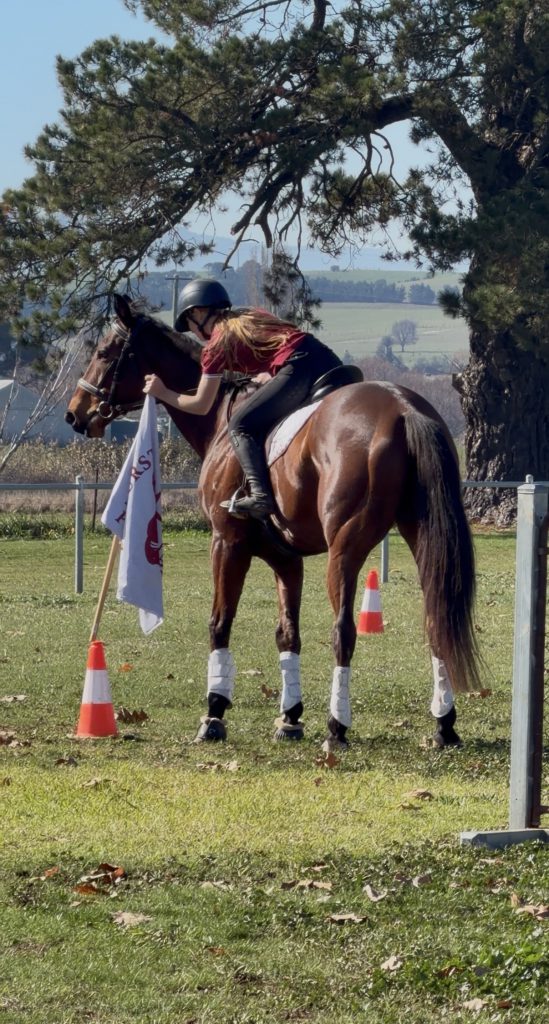
“For anyone who doesn’t know, Pony Club is a community-based youth riding organisation designed to teach horse management and diverse riding disciplines—from showjumping and dressage to handy pony and sporting events,” Hayley explains. “Thoroughbreds are just so smart. Being at a Pony Club rally day where they are seeing other horses everywhere, hearing the PA system, bells ring, or kids playing around, plus watching cars moving around really helps desensitise them. Getting to participate in all the different disciplines in such a safe space keeps their minds busy and helps build confidence within the partnership between horse and rider.”
Having owned Bradley for three years, Hayley shares that the club has been the perfect space to learn new skills together. “What I love most is the incredible partnership we’ve built, and how rewarding it is to see him tackle every challenge with a level head,” Hayley says. “Bradley isn’t the most athletic over the show jumps, but he absolutely loves his dressage training—we have even started to nail our shoulder-ins and leg yields! He has come such a long way, and his topline is improving beautifully. Thoroughbreds have the best work ethic, and Bradley is just so eager to please.”
Mirroring the President’s advice, Hayley’s ultimate tip is to surround yourself with supportive people and a great coach. When the right foundation and coaching come together, regional pony clubs become the perfect place for a retired racehorse to thrive. It is incredibly rewarding to see retired racehorses like Bradley enjoying such a fulfilling next chapter.
WANT TO LEARN MORE?
To find your own retired racehorse or learn more about Team Thoroughbred NSW official retraining and rehoming program visit teamthoroughbred.com.au or follow @TeamThoroughbredNSW on social media.