With another Australian summer on the horizon, horse owners across New South Wales are reminded that rising temperatures can quickly challenge the comfort and wellbeing of retired Thoroughbreds. Whether enjoying life in a paddock or light work, these horses still require attentive summer management to stay healthy and hydrated.
Understanding Heat Stress
Horses rely on sweating and evaporation to regulate body temperature. When humidity is high or shade is limited, this process becomes less effective, making horses, particularly older or heavier individuals, susceptible to heat stress. Early signs include rapid breathing, nostril flaring, weakness, dark or congested mucous membranes, or unsteadiness. Severe heat stress may lead to collapse or organ damage if left untreated. Owners should remain alert, particularly on still, humid days or during transport.
Hydration and Electrolyte Balance
Adequate water access remains the foundation of heat prevention. Thoroughbreds should have unrestricted access to cool, clean water at all times, with troughs checked daily for contamination, leaks, or algae. Adding plain salt (sodium chloride) to feed can stimulate thirst and encourage better hydration. For horses that sweat heavily or have limited access to fresh pasture, balanced electrolyte supplements may assist in replacing sodium, potassium, and chloride losses. Always provide free-choice water alongside supplements and avoid offering electrolytes in water unless you’re confident the horse will continue to drink normally.
Shade and Paddock Management
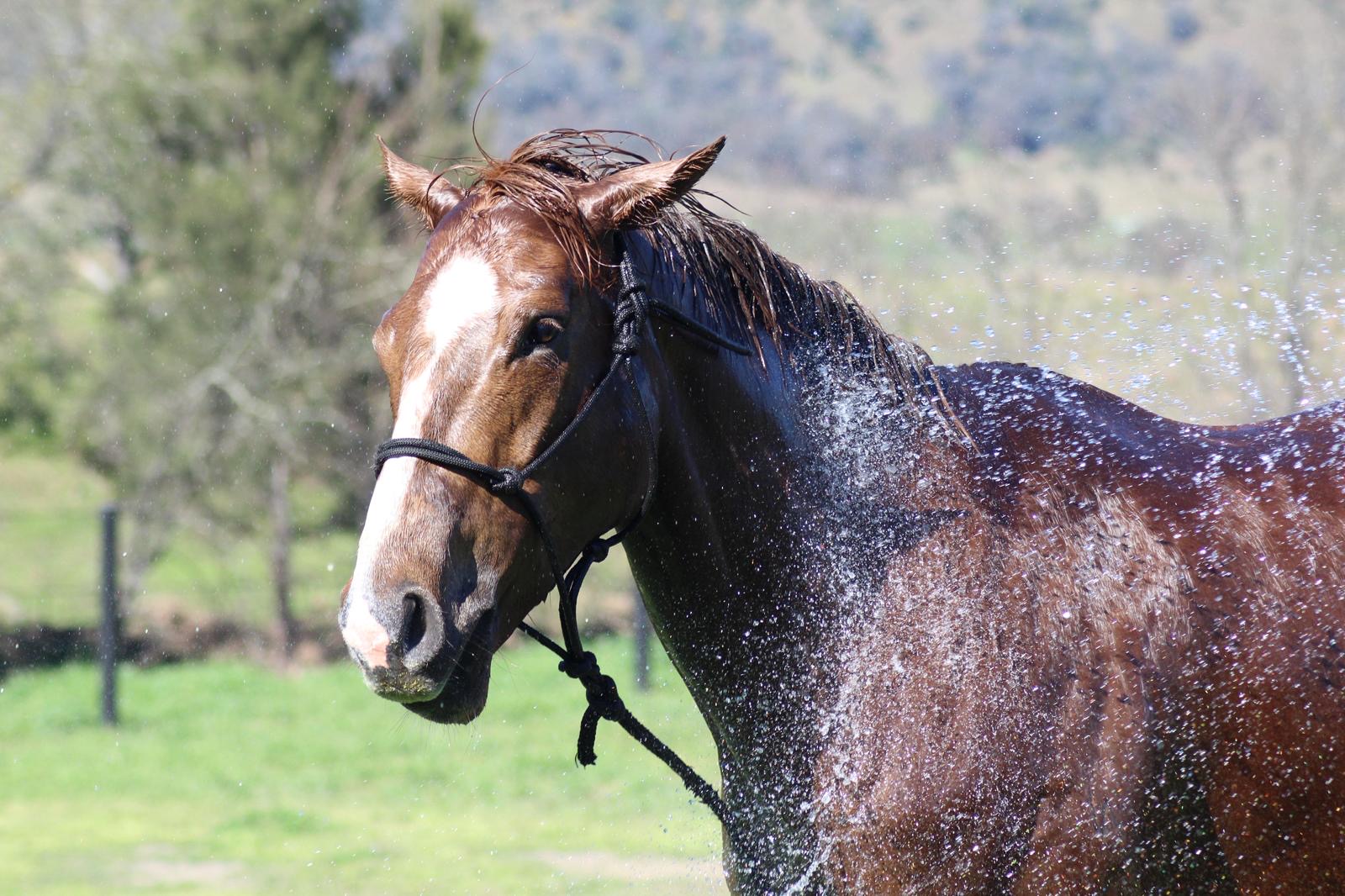
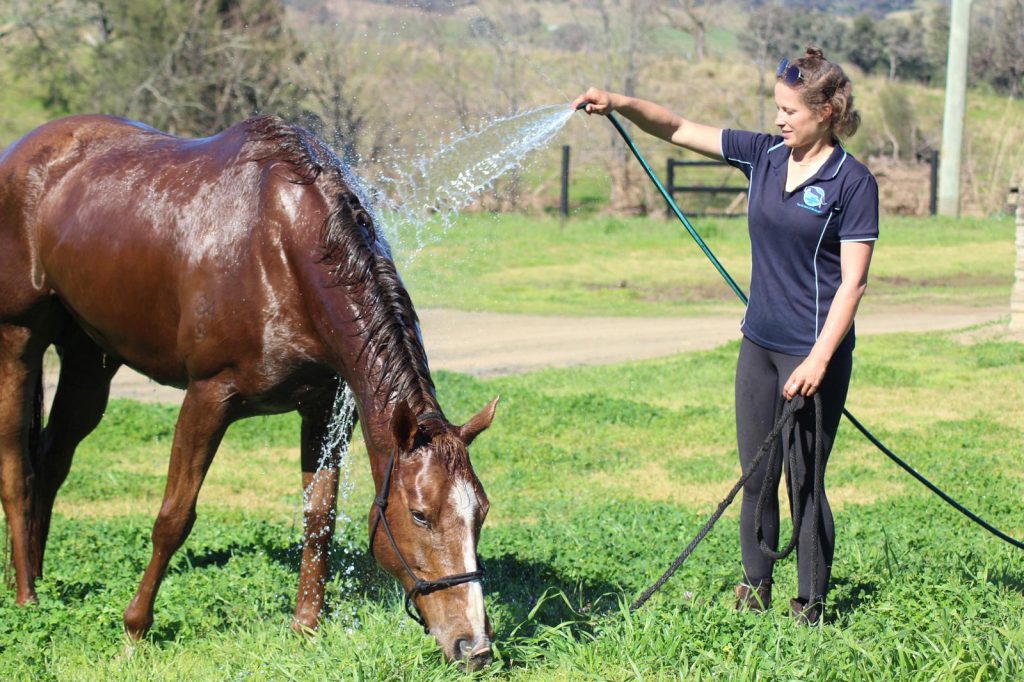
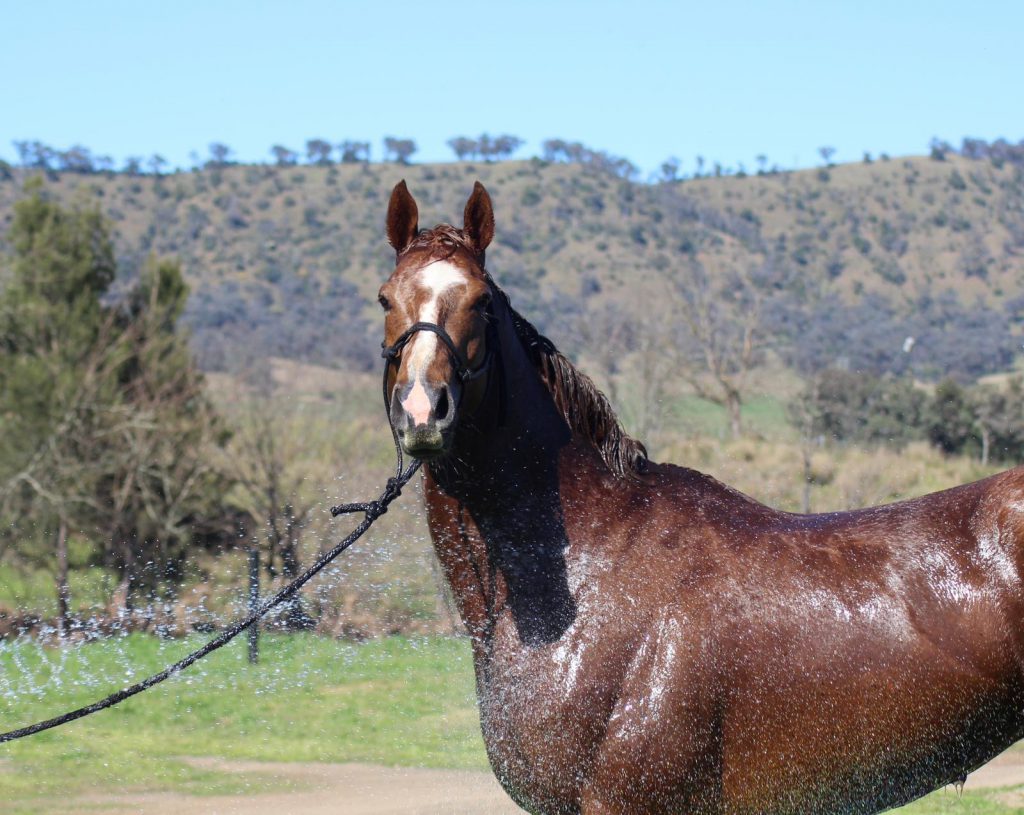
Access to shade is essential. Trees, shelters, or well-oriented stables offer refuge from direct sun. Where natural shade is limited, owners should consider portable shelters or shade cloths to provide relief during peak daylight hours. Good airflow is equally important as stagnant, enclosed spaces trap heat. If stabled, ensure doors and windows allow cross-ventilation. Light exercise or grooming sessions are best scheduled early in the morning or late in the evening when temperatures are cooler. After exercise or transport, gentle hosing can lower body temperature effectively. Focus on large muscle groups such as the neck and chest, then scrape off excess water to maximise evaporative cooling. Allow horses time to walk and recover in a shaded area.
Recognising and Managing Heat Stress
If a horse appears lethargic, stops sweating, or fails to recover after exertion, move it immediately to shade or a breezy spot. Apply cool water continuously and contact a veterinarian for guidance. Untreated heat stress can cause dehydration, muscle damage, and, in extreme cases, organ failure. Prompt action greatly improves recovery outcomes.
Key Tips for Summer Horse Care
• Provide constant access to clean, cool water.
• Add salt or electrolytes as advised by your vet.
• Check water troughs daily and keep them clean.
• Offer shade and good ventilation in stables and yards.
• Exercise during cooler hours of the day.
• Hose and scrape horses after work to promote cooling.
• Seek veterinary attention immediately if heat stress is suspected.
FIVE TEAM THOROUGHBRED HORSES FROM BELLTREES FARM UNDERTOOK WEEKS OF RETRAINING TO COMPETE IN THE KING OF THE RANGES STOCKMAN’S CHALLENGE IN THE UPPER HUNTER
The King of the Ranges Stockman’s Challenge is a multi-day event in Murrurundi NSW, celebrating the traditional skills of Australian stockmen and women through a series of tests in cattle work, packhorse handling, whip-cracking, cross-country riding and more.
This year, five Team Thoroughbred horses from Belltrees Farm underwent an eight-week retraining program with their respective trainers before stepping up to compete in the challenge, each pairing showcasing the incredible adaptability and heart of the Thoroughbred breed.
The team included Lisa Tetley and Sacramento (9yo bay gelding), a former Gai Waterhouse & Adrian Bott-trained stayer who returned nearly $700,000 in prizemoney winning seven races including the VRC St Leger and the Canberra and Parramatta Cups.
Also, Ella Lathlean and Sailing (9yo chestnut mare), a galloper that won five races in the Northern Rivers – two at Casino and one at Coffs Harbour, Murwillumbah and Grafton.
Others in the team were Maddy Dunbar and Brash (9yo bay gelding), Danielle Hamilton and Jackson Storm (11yo brown gelding), and Lyric Pepperall and Kashikoi (9yo brown gelding).
BUILDING BONDS THROUGH THE CHALLENGE
For these trainers, the challenge wasn’t just about competition, it was about connection, patience and discovery.
Over eight weeks, they worked to retrain their ex-racehorses introducing them to new skills like mustering, obstacle courses and whip-cracking, all while building trust and confidence.
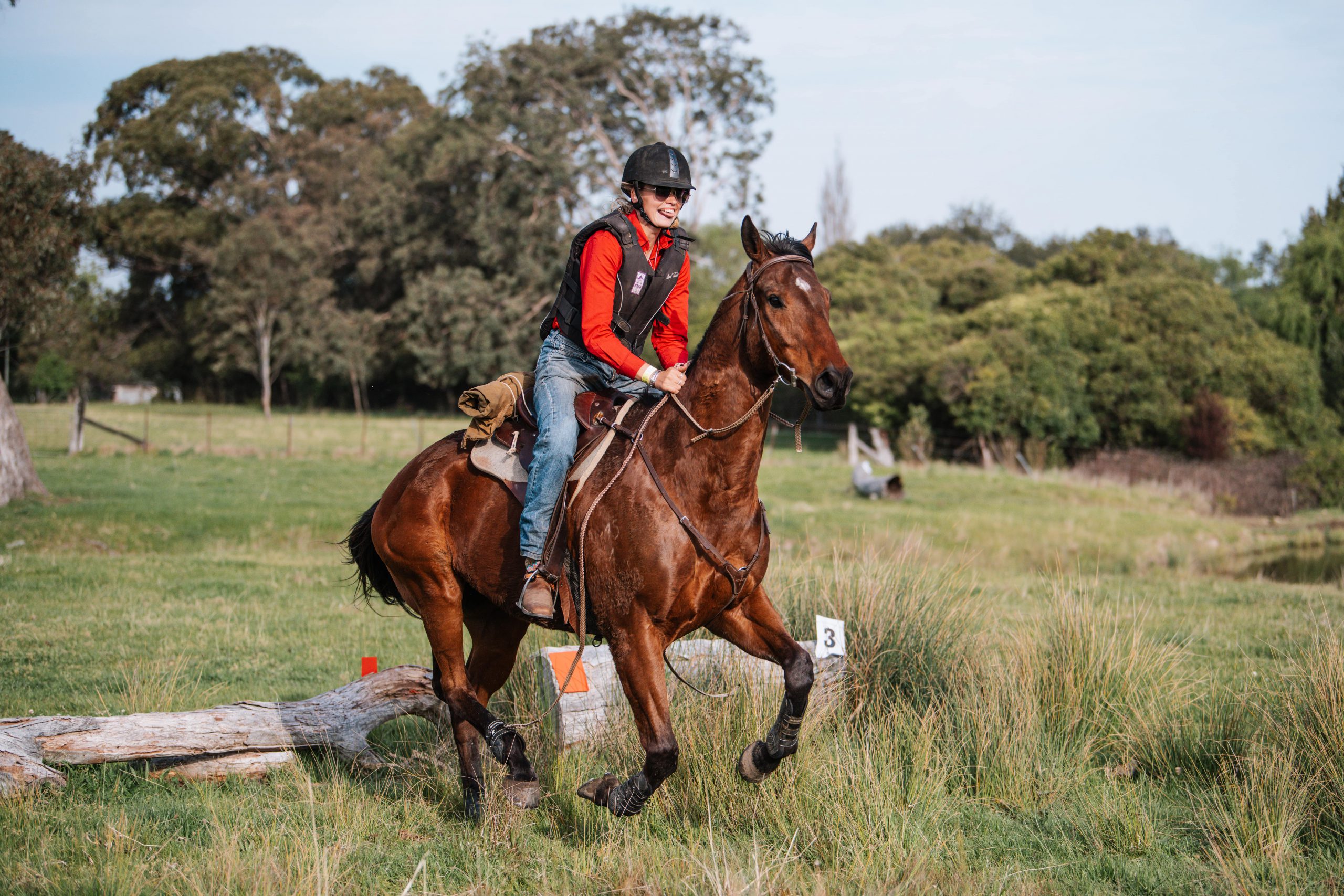
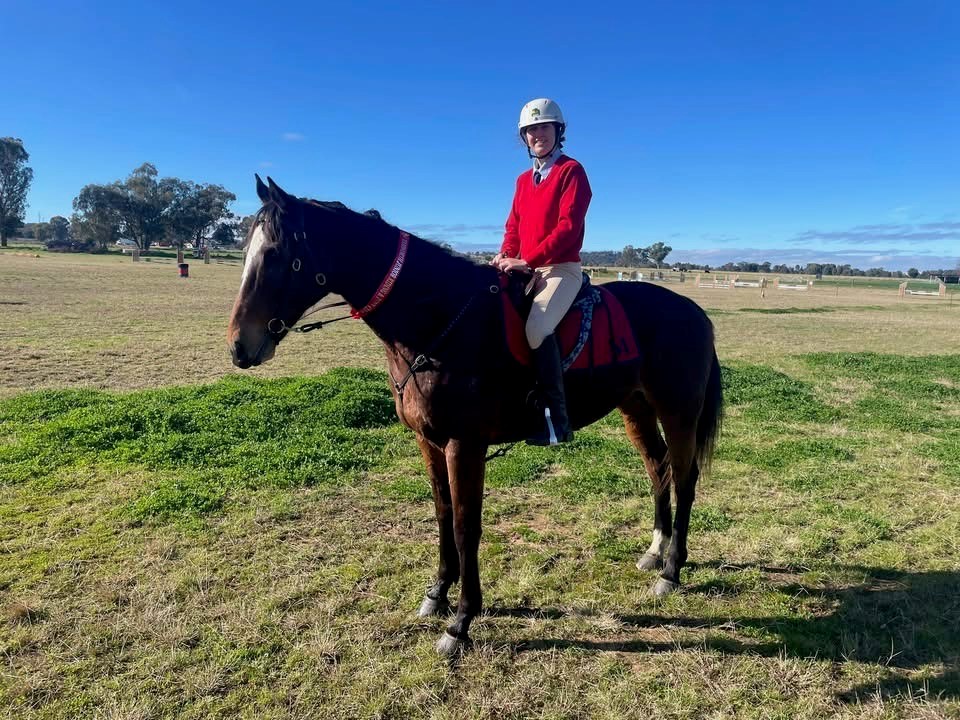
Maddy Dunbar and Brash were one of the standout partnerships of the event, finishing an incredible second overall, a remarkable achievement for a horse that only eight weeks earlier was nervous, unsettled and unsure of his new purpose.
One of the standout partnerships at Murrurundi was Maddy Dunbar riding Brash
“Words can’t describe how proud I am of this horse,” Maddy said. “Brash was not easy, but he came such a long way in such a short time.
“He went from being a horse that would be in a full body sweat after five minutes on the float, to calmly loading every week for lessons.
“He learned to appreciate trail rides, mustering, jumping, and his favourite, cross country.”
Brash’s success is a testament to the resilience and versatility of Thoroughbreds, proving that with patience and the right partnership, they can excel in disciplines far removed from racing.
He remains available for rehoming and is ready to continue his journey as a calm, capable and athletic all-rounder.
Sacramento: The Gentleman of the Group
Lisa Tetley described Sacramento as “a pure gentleman” who approached every new challenge with curiosity and willingness.
Sacramento (Lisa Tetley)
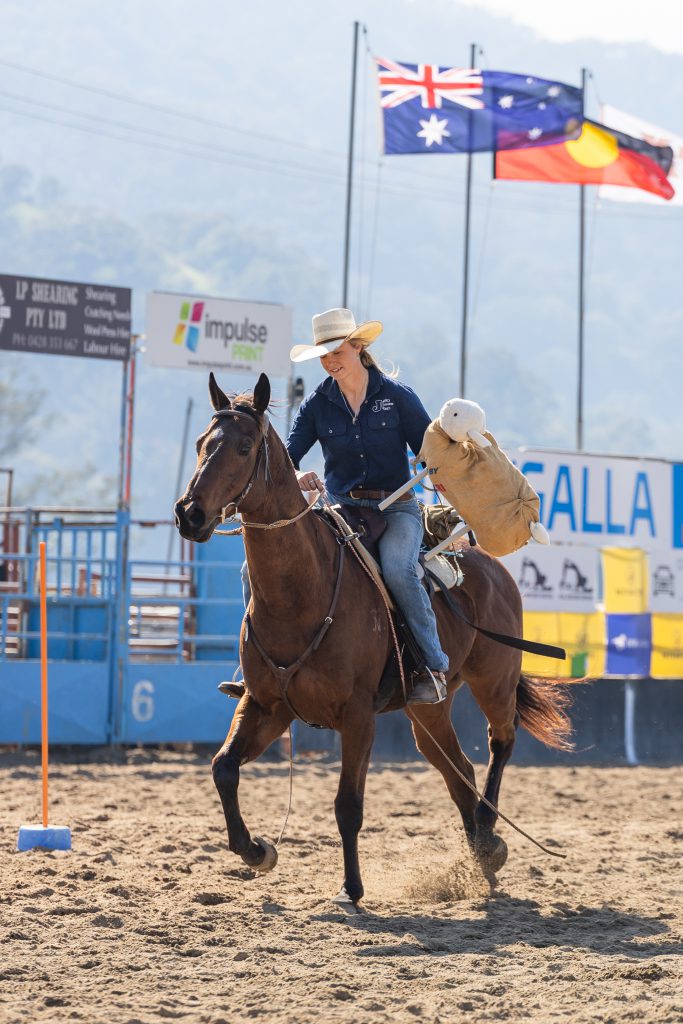
Over the eight weeks, Sacramento experienced everything from pony club ribbon days and ranch riding clinics, to barrel racing and mustering cattle and sheep.
“He took everything in his stride and was always willing to try,” Lisa shared. “He especially loved barrel racing – the run home was his favourite part.
“He’s a kind and gentle giant suited for any rider level.”
Jackson Storm: A Story of Connection
Among the standout stories to come from the challenge is Jackson Storm and his trainer Danielle Hamilton, who formed such a strong bond that Danielle decided to rehome him permanently after winning the event.
Jackson Storm and Danielle Hamilton competing in the King Of The Ranges
“When I first met Jackson, he took a sip of my coffee like it was the most normal thing in the world,” Danielle shared.
“He was confident, sharp and aware of everything happening around him, I knew then we’d get along.”
Over the eight weeks, Danielle worked to rebuild Jackson from the ground up, approaching his retraining “like a breaker” to understand his strengths and mindset.
Together, they tackled every challenge from whip-cracking to cattle work, learning patience and trust along the way. By the time competition weekend arrived, Jackson had transformed.
“He stayed so calm and brave, nothing fazed him,” Danielle said. “By the end of the eight weeks, he wasn’t just a horse with two months’ training; he was a whole new horse with a heart of gold.”
Renamed Ernie, Jackson now enjoys life as Danielle’s daily mount.
“He’s improved so much in his jumping and even helps new breakers settle in,” she said. “He’s just full of character and ready for whatever comes his way.”
Finding the Right Path: Kashikoi’s Journey
While some horses thrived in the Stockman’s Challenge environment, Lyric Pepperall’s partner Kashikoi showed that success sometimes means finding the right fit.
From the outset, Lyric recognised Kashikoi’s intelligence and willingness but noticed he was more sensitive to the noise and movement that came with stock work.
After introducing him to her jumping arena, everything fell into place.
“When I brought him into the jump paddock, none of it phased him,” Lyric said.
“He accepted all the scary wings and fills, and once he started locking onto the jumps, I knew then he was better suited to the equestrian world.”
Kashikoi and Lyric Pepperall
Making the decision to retire him from the challenge wasn’t easy, but Lyric prioritised Kashikoi’s wellbeing.
“He was loving his flatwork and the job of jumping, but I didn’t want to push him into something that didn’t suit him,” she explained. “Belltrees were so understanding – they knew I was putting his best interests first.”
The experience taught Lyric valuable lessons about patience and adaptability in retraining Thoroughbreds.
“They all have different quirks from their racing days,” she said. “The key is to make them comfortable and recognise where their potential truly lies.”
Lyric believes Kashikoi’s future will be bright in showjumping or dressage, where his athleticism and soft carriage will shine.
“He loved having a job to do,” she added. “He’s such a kind, responsive horse, I have no doubt he’ll excel in the right hands.”
The Legacy of Team Thoroughbred The King of the Ranges Challenge not only showcased the versatility and resilience of off-the-track Thoroughbreds but also the dedication of the trainers who help them transition into new careers.
For some, like Jackson Storm, it marked the beginning of a lifelong partnership. For others, like Brash, Sacramento, Kashikoi, and Sailing, it was a stepping-stone toward their next opportunity.
Each story of growth, patience, and connection embodies the mission of Team Thoroughbred NSW: Giving every retired racehorse the chance to find purpose beyond the track and shine in a new arena.
These horses have proven time and again that the Thoroughbred is truly one of the most adaptable breeds able to step from the racetrack into the world of stock work and western disciplines.